Like what you see? Comment, Follow, and Subscribe!

Friday, March 12, 2010

Unshod (Day Two)

Went for a jog in my new shoes again today to loosen up some stiff muscles.  The weather has been absolutely beautiful this week, which reminds me... "can I go back to California yet?"


Some sources suggest that unnatural form, and not solely heel-striking, is to blame for many running maladies.  This seems likely, though I would still argue that overzealous, running-shoe-enabled heel-striking is one of the most common sins.

The root of the problem seems to be 'unnatural running' and the modern equipment that enables it - the overpadded shoes, the asphalt and concrete, treadmills, perfectly flat and uniform tracks.

Asphalt and concrete have extraordinarily high elastic moduli, though it could be argued that we've been running on a variety of similarly-rigid surfaces for a very long time.

Treadmill junkies and track runners are blowing knees and ankles every quarter-mile on REAL surfaces, and how is it at all surprising?  All of that oversupported, flat, uniform, rigid, endless straight-line running does nothing to condition the stabilizing muscles that are absolutely necessary for robust real-world running.  Treadmill running makes you really good at treadmill running, and that's about it.

A good analogy would be the typical gym rat - comically oversized muscles, obscene single-rep maximum loads... but when placed in an environment with REAL resistance (jiu jitsu, for instance), they just don't measure up.  Time after time, I was surprised by how easy it was to overpower (not just outmaneuver) these types.  The reason is the same: picking up and setting down a heavy object, over and over again, makes you you really good at picking up and setting down that heavy object.  If that's your goal, that's fine, but useful power comes from realistic training.

Thursday, March 11, 2010

Unshod (Day One)

"Heel-toe, heel-toe," like they say it in phys-ed, is fine for walking... but humans were never designed to run this way.  The unnatural heel-striking gait favored by many joggers and runners transfers far too much energy to the knee, resulting in a host of joint maladies.

To confirm this statement, try running "heel-toe" barefoot on a hard surface - the result is quite painful.  The only reason people tend to run this way is because it is encouraged by the running shoes that we wear, the vast majority of which feature extreme amounts of heel cushioning.

'Running shoes' were invented in the 1970's by corporations eager to cash in on the jogging craze.  Most are designed to protect the wearer from damage caused by bad running form, which in turn encourages bad form and leads to long-term injury.  Running shoes also restrict the natural movement of the ankle, foot, and toes.

Humans had been running a long time when the 70's came around.  Since the dawn of the species, we have been running barefoot or wearing moccasins or sandals which protect the feet from cuts and abrasions but do not offer any padding.  Running this way encourages proper form that reduces the impact of the motion, strengthening stabilizing muscles in the toes, foot, ankle, and calves, and lessening eccentric loading of the knee.

I've hated shoes, running shoes especially, since I first wore them for baseball, basketball, and soccer in elementary school.  Summers spent barefoot are a fond memory.  I regularly mountain bike in flip-flops or light sandals, but there is a price to be paid - rocks and branches can be very sharp and unforgiving.  

Enter a new type of shoe: Vibram FiveFingers

The best description would probably be 'foot glove'.  This shoe is little more than a sole coupled with a snug-fitting leather or synthetic foot covering.  The toes each have their own 'compartment', like with a toe-sock, and are free to move independently.  They are typically worn without socks.

Walking in them feels just like going barefoot, minus the hazards of sharp rocks and broken glass (and apparently bizarre parasites, if you live in the right places).  Biking in them is a similarly pleasant experience.

Now here's the real project:

I have never been much for running because of the stress it puts on the knee, which has given me problems since 6th grade.  I went on my first run in these shoes last night, covering about 3.5 miles of grass, dirt, gravel, and asphalt.  The sensation of running is fantastic - I can actually feel the surfaces underneath me as I traverse them.  While it's much too early to tell how I will fair in the long-term, the shoes are definitely doing their job: my toes, feet, ankles, and calves are quite sore in unexpected places.

I will keep track of my progress with the aim of giving a final recommendation in a few months.  Thanks to Kyle for telling me about these shoes back in August, and finally convincing me to try them out!

Wednesday, March 10, 2010

Smell That?

The return of the earthy scents is one of my favorite parts of the transition from winter back into spring.  Of all of the flavors, the scent of rain is the most unmistakable.

One of the primary contributors to this distincitive smell is the bicyclic organic compound shown here, geosmin.  According to Wikipedia, it is produced by a number of soil bacteria such as the Actinomycetes (which also have a variety of biotechnological uses), and is also responsible for the earthy taste of beets and bottom-dwelling freshwater fish.  The human nose can detect geosmin at vanishingly low parts-per-trillion concentrations.

Ahhh... the sweet smell of microbial metabolic biochemistry.

Sunday, February 28, 2010

Chemical Engineering Education, Part One

It occurred to me yesterday that I have no idea what the top ten bulk chemical products in the world are.  I cannot connect the common names (limestone, potash) to the most basic of chemical reagents, and I have no idea where or how they are derived.  I just barely grasp the general processes that occur in an oil refinery, and I know next to nothing about any other industrially-relevant chemical transformations.

I can recite Avogadro's Number far beyond a reasonable number of decimals, but I have no idea how the number was discovered or derived and I can't explain its significance outside of its relationship to the seemingly arbitrary definition of the 'mole'.  The same goes for the Boltzmann constant, the Faraday constant, the ideal gas constant.  I have no idea who Avogadro, Boltzmann, and Faraday where.  I have only a hazy understanding of where chemical engineering came from - arisen somehow in the leap from alchemy to industrial chemistry, tied to the Industrial Revolution and the steam engine - and this is only due to a few minutes here and there of my own efforts.

For all of the Liberal Artists endlessly beating the drum of 'general education', higher education's efforts to instill something beyond the knowledge of a handful of mathematical relationships seem to have failed outright.  A third of my education in college, and a full four-fifths pre-college, has technically been in the 'liberal arts'.  The failure began in what was NOT emphasized: how my chosen discipline connects to the real world.  The lack of history and the absence of those people and the discoveries they made robs science of it humanity and strips it of the logical progression of our understanding that makes it all make sense.  Without history, there is no foundation upon which to consider the present.  The failure ends at the feet of the Ivory Tower Intellectual, who deems it all (reality) to be too complicated and too practical, and makes the decision to leave it all out entirely... in favor of a grand meaningless molecular understanding.

So we sit around and type away at our computers and derive silly things at the atomic level, all the while remaining ignorant of the REAL chemical engineering that goes on right in front of us!

Science is a story of the most improbable happenings and the people who made them happen, and it is a story that continues to the present.  To deny the connections science has with the real world is to turn away from practicality, applicability, usefulness.  The drive for academic prestige (a synonym for 'complete irrelevance') has enabled the Ivory Tower Intellectual to move in on the discipline - even at the good old Land Grant universities, which have pledged from the beginning to serve the people by ensuring that knowledge is applied.

If Chemical Engineering wishes to avoid becoming a wanna-be Chemistry, the philosophy with which it is taught must change.  Every course must be organized from general to specific, providing the real-world context to keep students' interest and attention.  Every course needs to start with the history: where did all of this come from?  How and why was it discovered?  Who discovered it?

Give Newton and Leibniz a rest - analytical mathematics is NOT the future of this discipline.  Invite Johannn Becher to pull up a chair instead, and perhaps we'll all learn a thing or two.

Wednesday, January 6, 2010

Router Configuration, Part One

If you are on the market for a router, the Linksys WRT54GL is an excellent choice.  The reason it has won 30+ consecutive 'Newegg Customer Choice' awards is simple - by upgrading the software that runs on the router hardware itself ('flashing the firmware'), this ~$50 router can be made to do advanced networking tasks that it would take a several-hundred-dollar router to do otherwise.

The upgrade process itself is fast and simple: download the appropriate Linux-based firmware from this site, then log onto the router itself and flash the new firmware using the 'Update' administration tab... but perhaps I should start at the beginning.

The Router
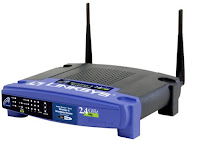
A router is a piece of networking hardware that allows computers on a network to communicate with eachother, and with outside networks, by routing packets of data within and between networks.  In the typical home use, the router serves as an interface between the Local Area Network (LAN; the computers in your house) and the Wide Area Network (WAN; your Internet Service Provider's hubs that connect to the Internet).  The router is the gatekeeper, directing requests and data between the LAN computers and the Internet.  A process called Network Address Translation (NAT) allows the router to 'hide' the LAN from the WAN ('IP masquerading'), and the router also acts as a hardware firewall to screen out unauthorized data traffic.

IP Addresses
Traffic is routed on networks by assigning an address to each node in the network.  Internet Protocol version 4 ('IPv4') addresses are formatted as follows: 192.168.1.1; this particular representation is known as 'quad-dotted decimal notation'.  To connect you to the internet, your ISP assigns you an IP address.  Your router then assigns private IP addresses to itself each of the computers on the LAN; the addresses assigned are in the 'private IP address space' (which has been defined by the Internet Engineering Task Force (IETF) ) and only apply internaly on the LAN.

The router therefore has two different addresses: the WAN address assigned by the ISP and applicable to the Internet, and the LAN address assigned by the router itself and applicable within the LAN.  Why doesn't the ISP just assign WAN addresses to every computer on your network?  There are a finite number of IPv4 addresses, and they are rapidly running out!  For the Internet to function, all LANs behind a router are free to use duplicate addresses, but WAN addresses must be unique; by only assigning one WAN address to the router, WAN IPv4 addresses are conserved.  This problem eventually must be overcome by changing to a new format that allows a much greater number of IP addresses (IPv6).

LAN, WAN, and MAC
To see information on your network connection on a Windows computer:
  1. Hit 'Windows-R' to bring up the 'Run' dialog
  2. Type 'cmd' and hit enter to bring up the command prompt interpreter
  3. type 'ipconfig /all'
Dig through the resulting output to find the description of the network adapter that you use to connect to the internet (usually 'Wireless LAN adapter' or 'Ethernet LAN adapter'):
  • 'Physical' or 'MAC Address' - unique ID assigned by the manufacturer; AA-BB-CC-DD-EE-FF
  • 'IPv4 Address' - your computer's LAN IP address
  • 'Default Gateway' - the LAN IP address of your Internet Gateway (your router)
To find the WAN address of your router, just head to http://whatismyip.com.

When you're surfing the internet, your computer is sending requests for Internet information to the LAN IP of your router; the router uses NAT to hide the LAN IP address of your computer, and sends the request off into the Internet superstructure (a future article!).  The Internet replies to the WAN IP of the router, which then forwards the reply to the LAN IP of the requesting computer.  Fortunately, not too complicated!

Now that you know a little about LAN, WAN, and MAC addresses, you're ready to access and configure your router!  Stay tuned for Part II.